
Bald-Faced Hornet Control in Southwest Michigan, Indiana and the Greater Louisville Region
Finding a large, gray paper nest hanging from a tree or attached to your home can be an unsettling discovery, especially when black and white wasps are constantly flying in and out. Bald-faced hornets are common throughout Southwest Michigan, Indiana, and the Greater Louisville region, and while they serve an important purpose in nature through being predators and pollinators, their nesting habits can create problems when colonies develop too close to people.
These stinging insects are known for aggressively defending their nests, making removal a job best handled by experienced professionals. Franklin Pest Solutions offers professional wasp and hornet control to help homeowners identify troublesome colonies and determine the most appropriate way to address them.
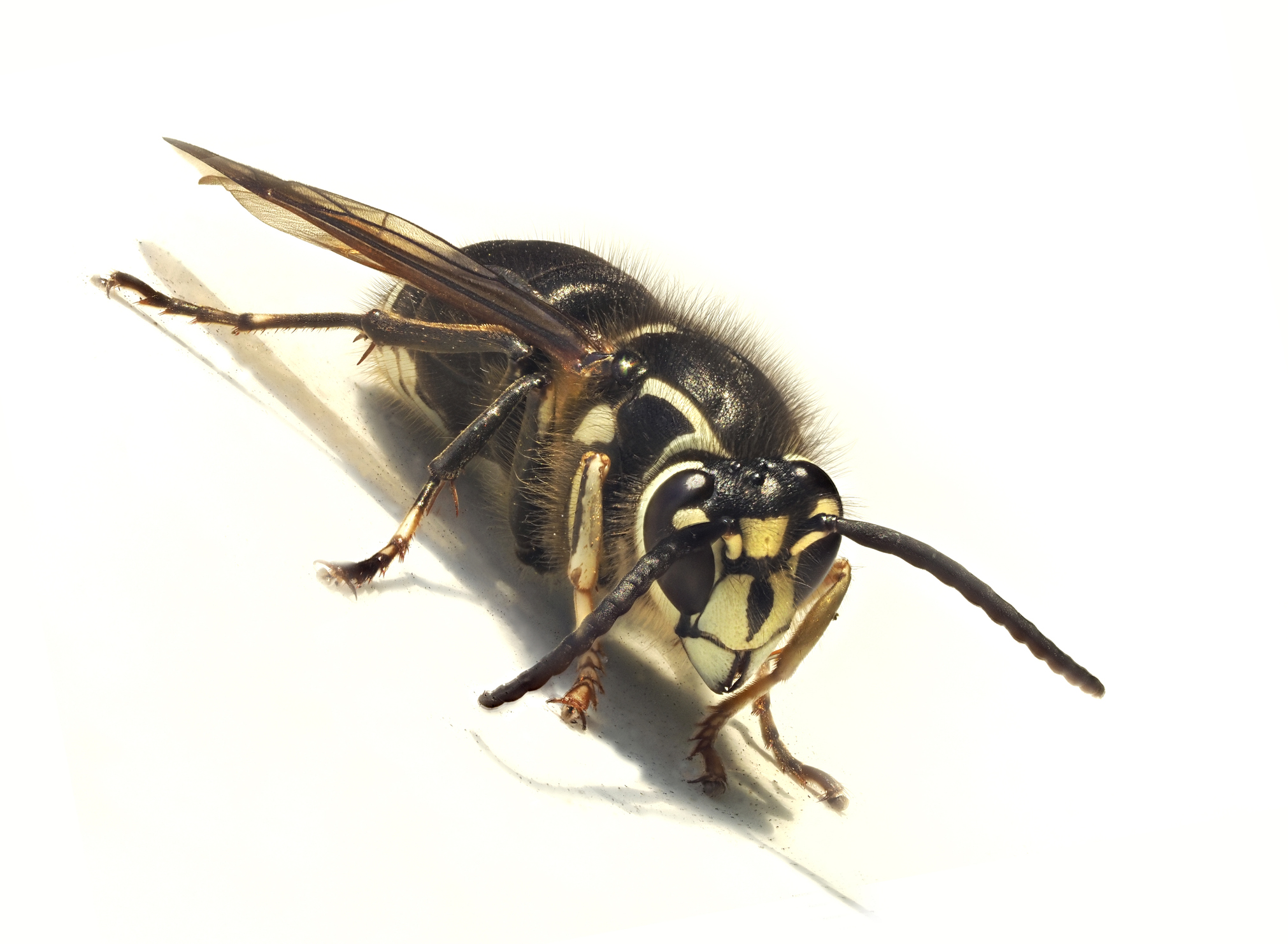
How to Identify a Bald-Faced Hornet
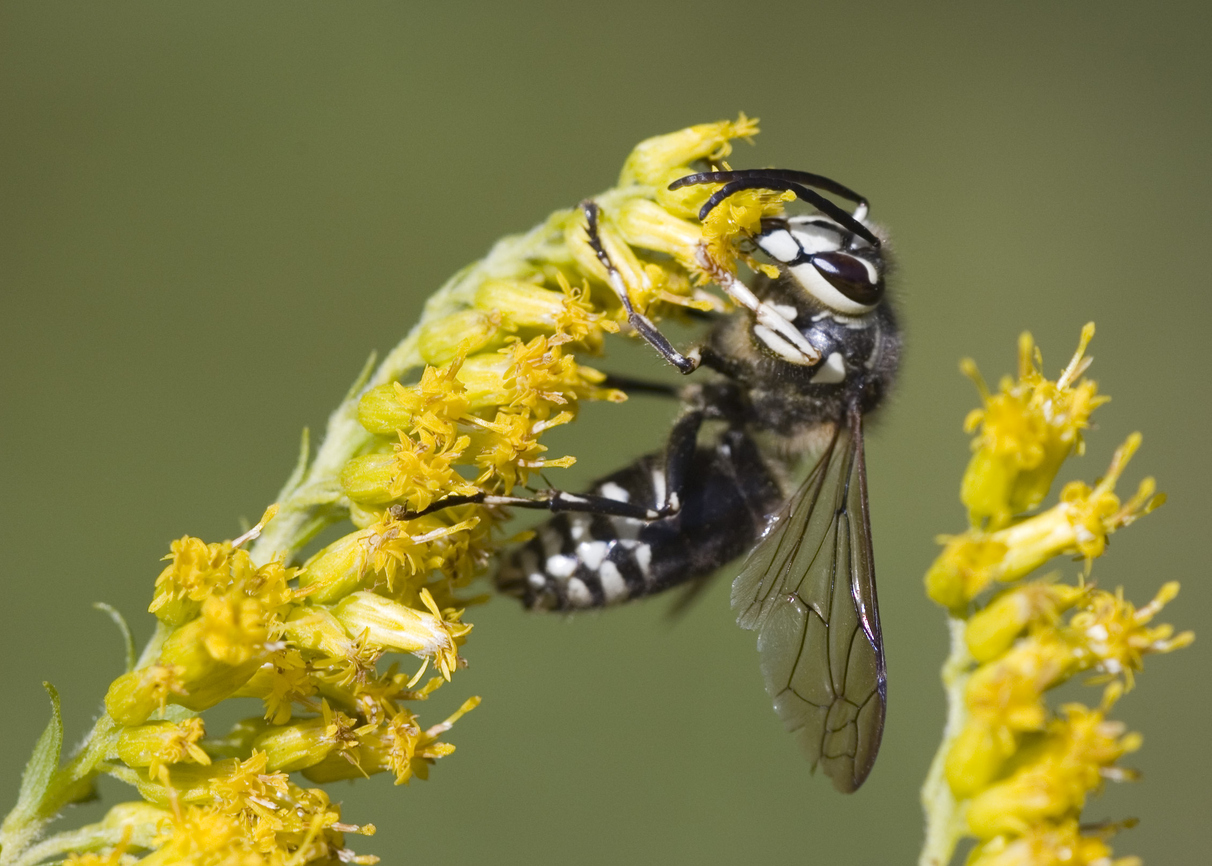
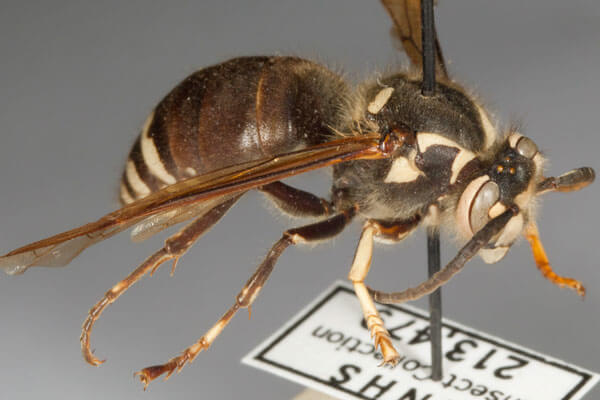
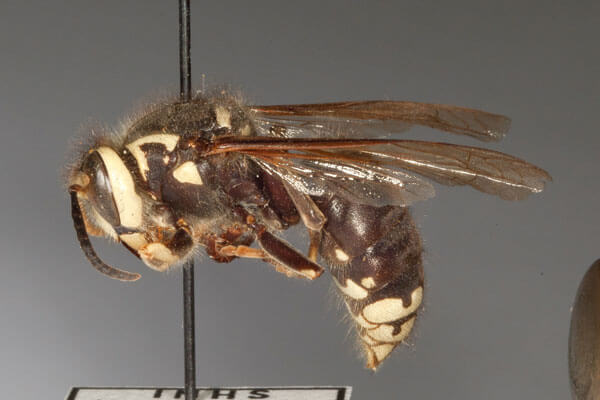
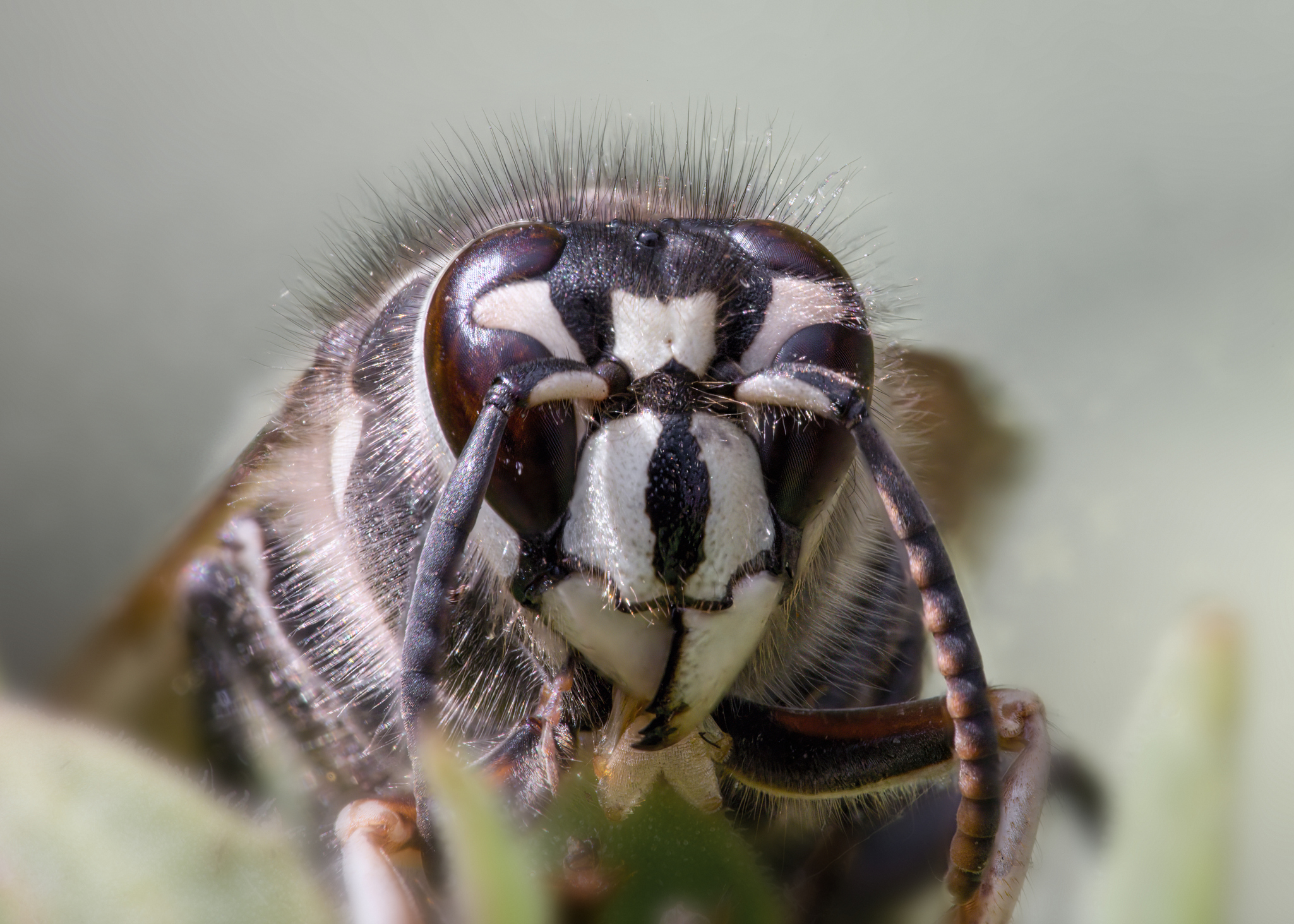
Bald-faced hornets have a distinctive appearance that separates them from many other wasps found across the Midwest. Rather than the familiar yellow and black stripes of most yellowjackets, they have bold white markings against a predominantly black body.
Appearance
- Black body with contrasting white markings on the face, thorax, and abdomen
- Workers typically measure approximately 5/8 to 3/4 inch long, while queens may be larger
- Smooth, relatively hairless body with a narrow waist
- Two pairs of wings and six legs
Habitat
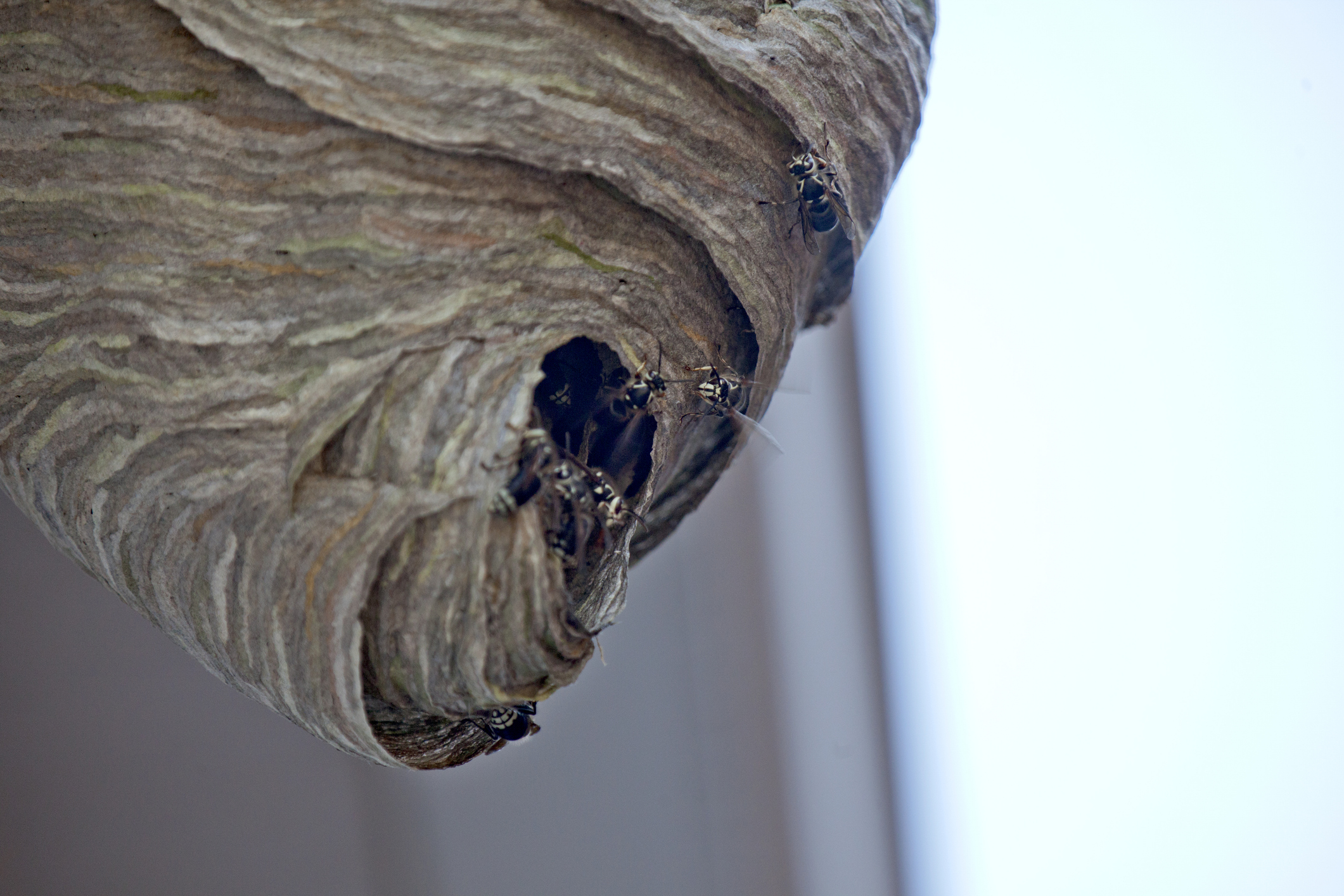
Bald-faced hornets prefer aboveground nesting locations, often choosing tree limbs, dense shrubs, roof overhangs, sheds, and other sheltered outdoor structures. Their football sized enclosed paper nests are one of the easiest ways to recognize an established colony.
Diet
These wasps feed on a combination of insects and sugary substances. Workers hunt flies, caterpillars, and other insects to provide protein for developing larvae. Adults consume nectar, fruit juices, and other carbohydrate-rich foods.
Additional Imagery
Is This Your Critter?
Maybe it is, maybe it isn’t. We can handle the identification and get you a solution to your problem quickly.
Get a remedy now. Send a message!
Where Do Bald-Faced Hornets Build Nests?
Unlike many yellowjacket species that establish colonies underground, bald-faced hornets construct large, enclosed aerial nests. They create the familiar gray, papery structure by chewing weathered wood fibers and combining them with saliva.
A nest may be difficult to spot early in the season, especially when hidden among leaves. As the colony expands, workers add layers to the structure, which can eventually become larger than a football.
Look for nesting activity around:
- Branches of trees and ornamental shrubs
- Roof eaves, soffits, and exterior overhangs
- Garages, barns, sheds, and outbuildings
- Utility poles and other elevated structures
- Landscaped areas near patios, decks, and walkways
A mature nest generally has a single opening near its lower portion, allowing workers to enter and exit throughout the day.
Are Bald-Faced Hornets Aggressive?
Bald-faced hornets aren’t typically interested in bothering people while searching for food, but they can become extremely defensive when something approaches their nest.
Workers respond to perceived threats by attempting to drive intruders away, sometimes attacking in groups. Because their stingers lack the barbs found on honey bee stingers, bald-faced hornets can deliver multiple stings.
A sting commonly causes immediate pain, redness, and localized swelling. People with allergies to insects could experience more serious reactions, including anaphylaxis.
Seek emergency medical attention if someone develops difficulty breathing, throat swelling, faintness, or other signs of a severe allergic reaction following a sting.

Frequently Asked Questions About Bald-Faced Hornets
What is the difference between a bald-faced hornet and a yellowjacket?
Bald-faced hornets are large with black and white markings. They typically nest in aboveground locations whereas yellowjackets are black with yellow markings, generally smaller than bald-faced hornets. Yellowjackets nest within the ground or wall voids.
How many bald-faced hornets live in one nest?
A well-established colony may contain several hundred workers by late summer, although the exact population varies depending on weather, food availability, and colony development. Larger nests typically support more individuals and greater activity.
Can bald-faced hornets damage my house?
Bald-faced hornets don’t consume structural wood the way termites do. However, they may attach their paper nests to eaves, siding, or other exterior surfaces. As opposed to aesthetics, the primary concern is usually the risk of stings when a colony is located near frequently used areas.
Will bald-faced hornets come back to the same nest next year?
No. Bald-faced hornets establish new colonies each spring rather than occupying nests left behind from previous seasons. However, a favorable nesting location may attract a new queen in a future year, resulting in another nest nearby. The workers die in the winter while the queen survives in concealed locations like within logs or underground.
What should I do if bald-faced hornets are nesting near my front door?
Keep people and pets away from the nest and avoid disturbing it. If the colony is close to a regularly used entrance, contact a professional pest management company to evaluate the situation. Don’t attempt to block the nest opening or remove the structure yourself.
Can I prevent bald-faced hornets from building a nest?
There’s no foolproof method for preventing bald-faced hornets from choosing a particular outdoor nesting location. Inspecting rooflines, outbuildings, and landscaped areas during spring can help identify developing nests early. If you discover activity near a frequently used area, seek professional guidance rather than disturbing the colony.

Get Professional Bald-Faced Hornet Control from Franklin Pest Solutions
You shouldn’t have to worry about disturbing a hornet nest every time you mow the lawn, spend time on your patio, or walk through your backyard. If bald-faced hornets have established a colony too close for comfort, Franklin Pest Solutions is ready to help.
Since 1929, our family-owned company has helped homeowners and businesses manage pest concerns with science-based solutions, local expertise, and a commitment to responsible pest management.
With service locations in Hammond, Michigan City, South Bend, Lafayette, Indianapolis, and New Albany, Indiana, we proudly serve communities throughout Indiana, Southwest Michigan, and the Greater Louisville region.
Call 1-800-GOT-PESTS? or schedule pest control service today to request a free quote and learn how Franklin can help with your bald-faced hornet problem.



They are very responsive.
“Have been with Franklin for over 20 years. My parents were clients as well. When wasps decide to make their home near a front door, etc., they are very responsive. Mark is the best and very thorough!”
P.B. | Homeowner
Munster, IN
You’ve got a pest problem. We’ve got your pest solution.
Whether you’ve got wasps, rodents, spiders (or you name it), we can assist with your pest problem. We can even provide same-day service. Drop us a line to schedule your pest control services today!

Safe For Your Family and Business
We’re licensed, trained, and certified by the Departments of Public Health and Agriculture, using safe, EPA-regulated materials, always.
Attacking Infestations at the Root
We don’t come in spraying. We evaluate the root of your problem, and recommend and enact pre-emptive measures before any chemicals are used.
Assessments Before Any Contracts
Our Customer Care Center walks you through every service, every charge, and every solution before you agree to anything. Our commitment is to you.