
There’s nothing quite like spotting a fast moving, many legged creature darting across your basement floor. Or perhaps you’ve noticed small, wormlike bugs crawling near your garage, bathroom, or entryway. Either way, finding these unexpected visitors inside your home can be unsettling.
Centipedes and millipedes become more noticeable in the fall as shifting temperatures and moisture conditions affect their outdoor habitats. Although they’re often mistaken for one another, these two pests have distinct appearances, behaviors, and reasons for showing up around your home.
How can you tell them apart? What attracts them indoors? Should you be concerned? And what can you do to keep them outside where they belong?
How Can You Tell Centipedes and Millipedes Apart?
Their names might suggest otherwise, but centipedes don’t necessarily have 100 legs, and most millipedes have far fewer than 1,000.
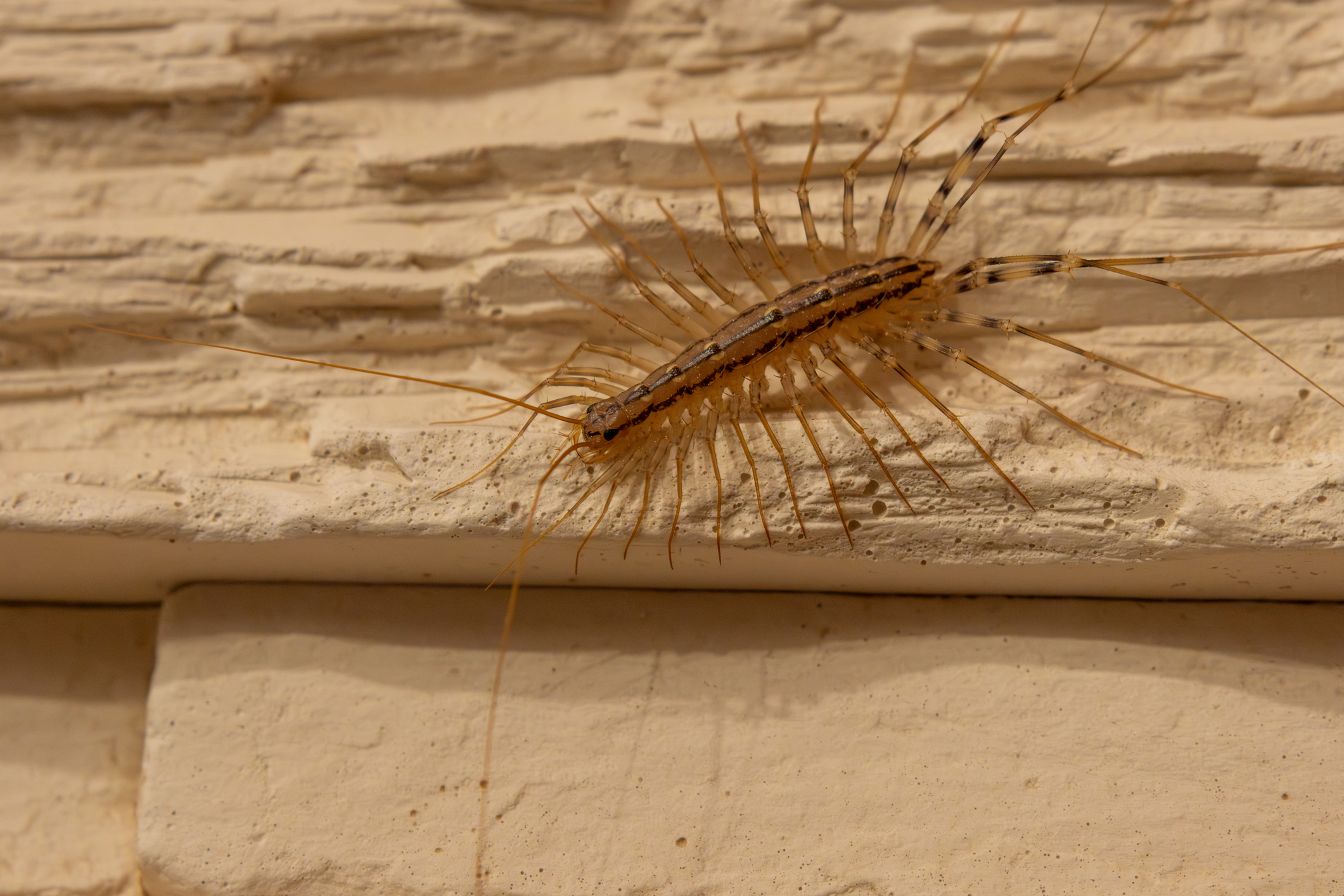
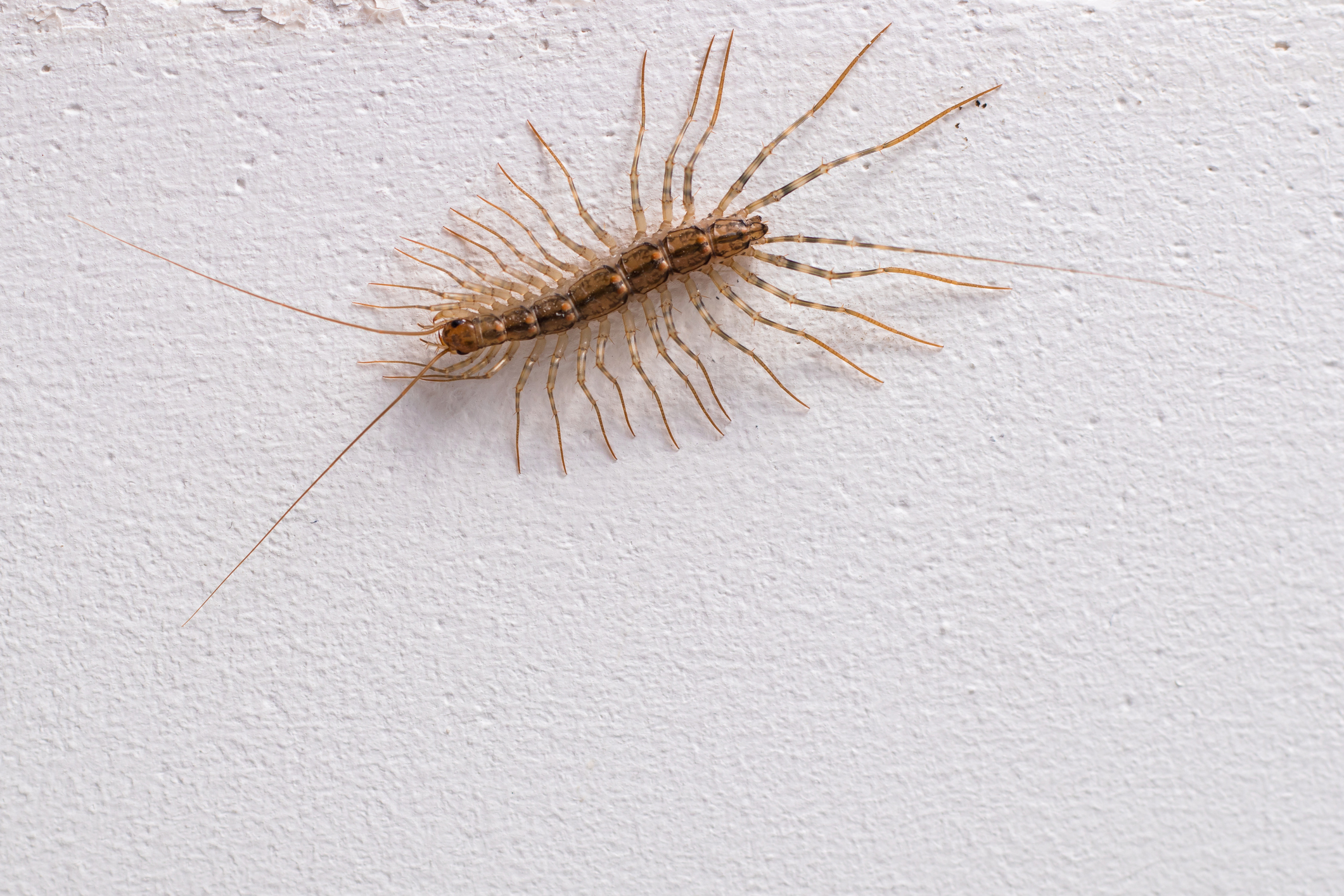
Centipedes have flat, elongated bodies with a single pair of legs attached to each body segment. House centipedes, which are frequently spotted indoors, are especially recognizable by their unusually long legs and antennae that give them a distinctive eyelash-like appearance. These quick moving creatures are predators that hunt insects, spiders, and other small invertebrates.
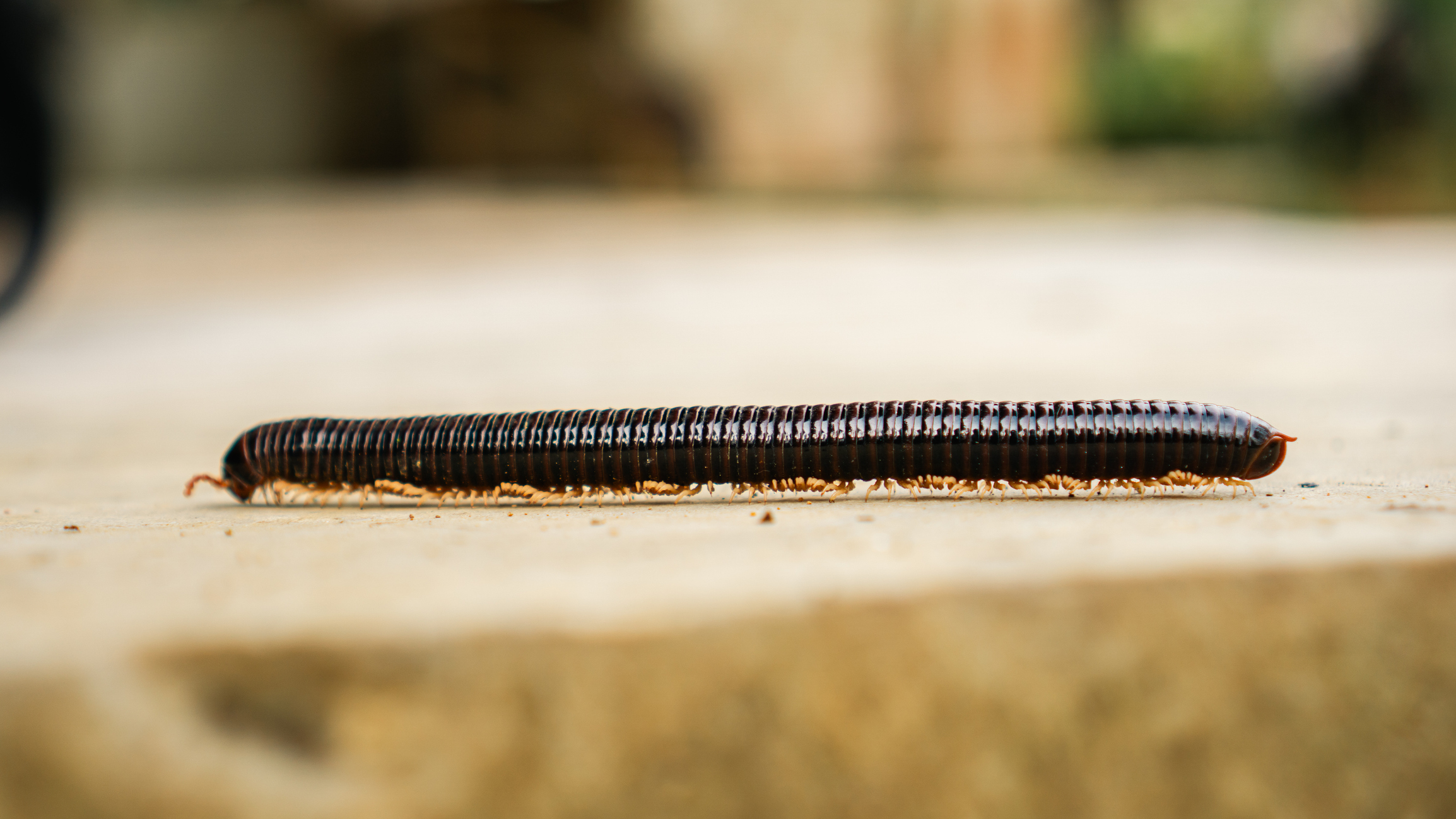
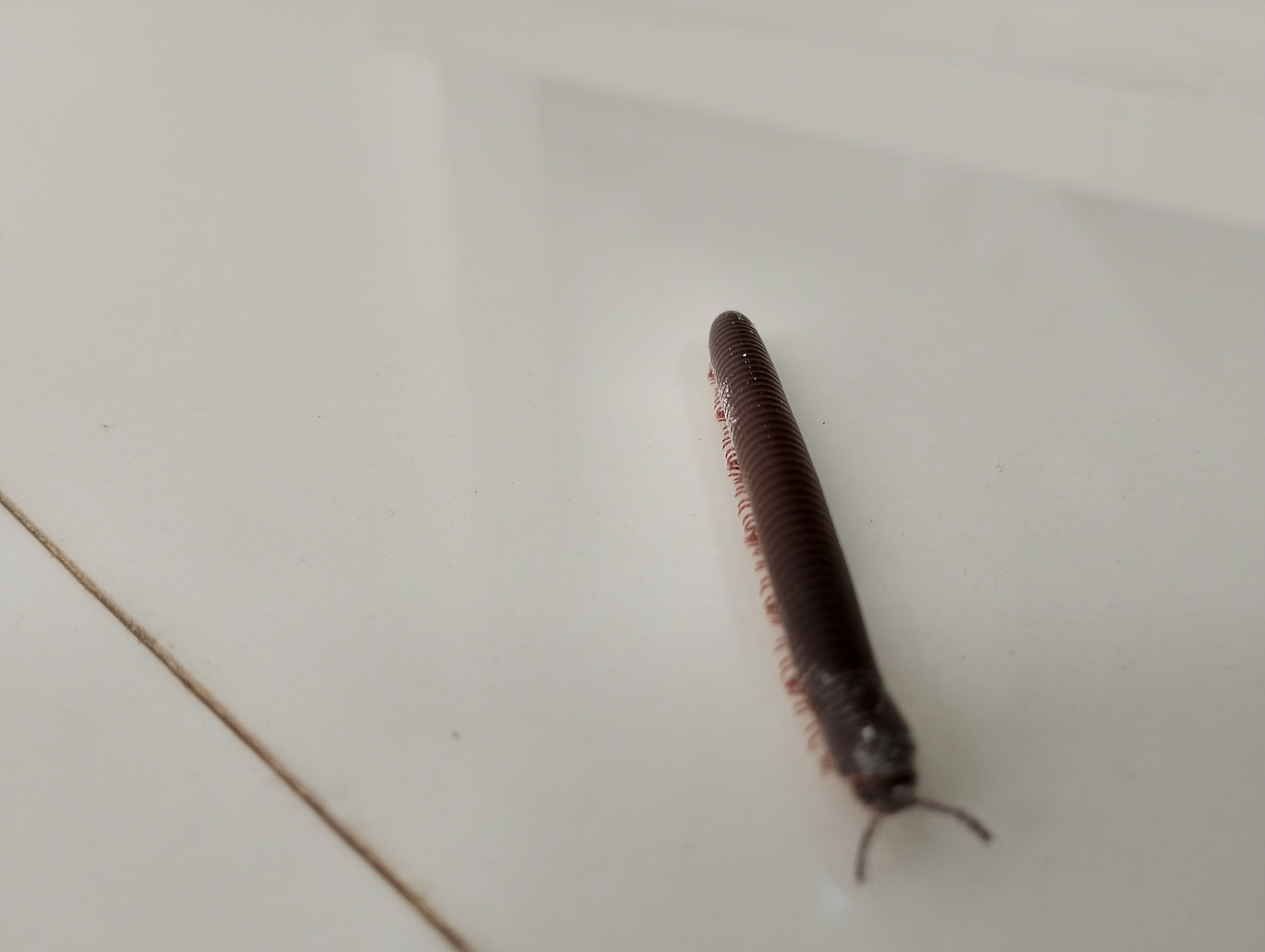
Millipedes have rounded, tube shaped bodies with two pairs of legs on most body segments. Unlike centipedes, their legs are short, and they travel at a much slower pace. Many species also curl into a protective spiral when threatened. As decomposers, millipedes primarily feed on decaying leaves, plant material, and other organic matter.
The easiest way to tell them apart is by how they move. If a many legged creature quickly disappears across your basement floor, it’s likely a house centipede. If it moves slowly and coils up when disturbed, you’re probably dealing with a millipede.
Why Are Centipedes and Millipedes Appearing Around Your Home?
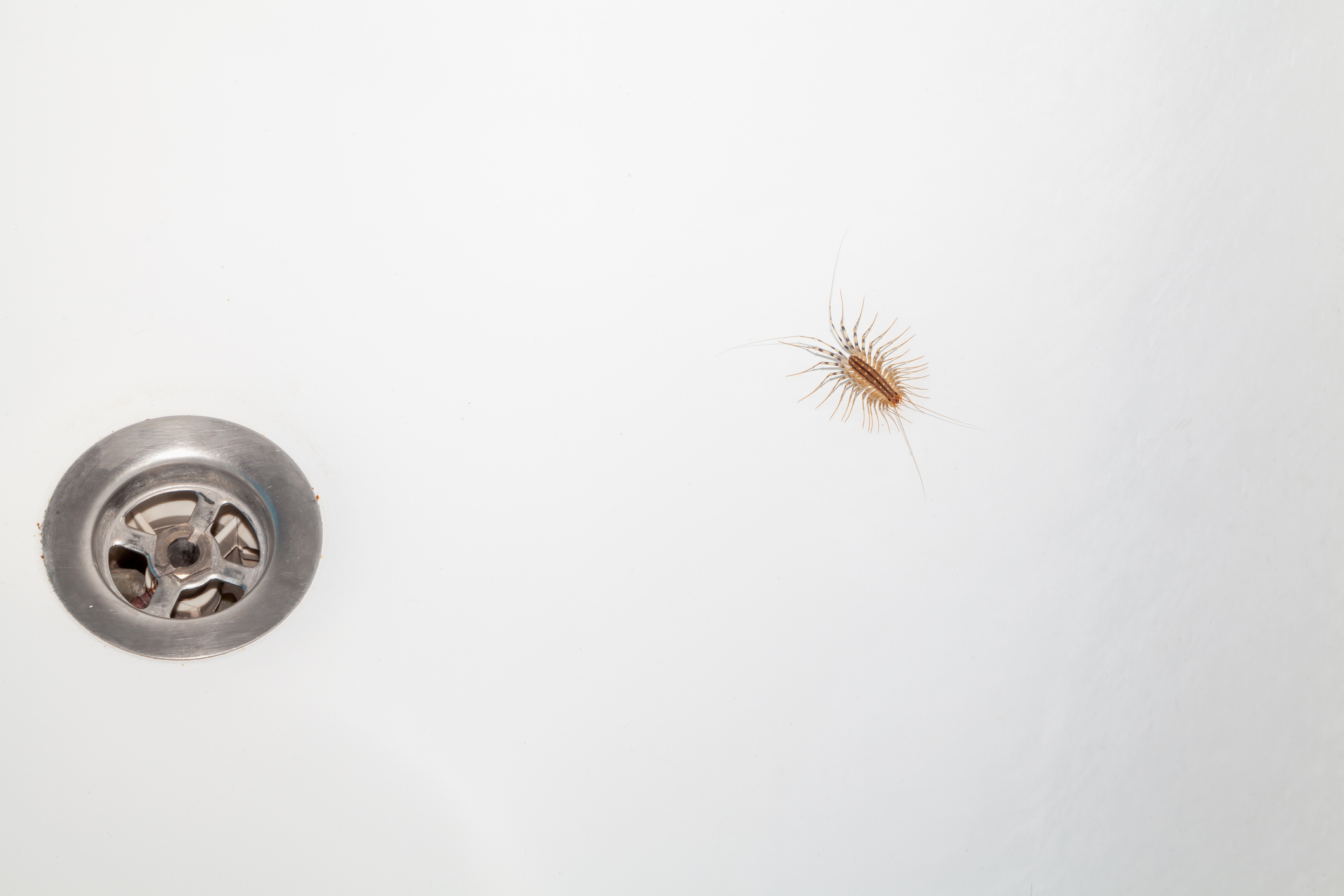
Moisture is often one of the biggest reasons these pests gather around homes.
Centipedes and millipedes thrive in humid, sheltered environments. Outside, they seek refuge under fallen leaves, rocks, mulch, firewood, and other materials that help retain moisture.
Changes in fall weather can disrupt these habitats. Periods of heavy rainfall, unusually dry conditions, and cooler temperatures may cause them to move in search of better conditions. Millipedes, in particular, can migrate in surprisingly large numbers when environmental conditions shift, sometimes gathering along foundations, patios, and exterior walls.
Both pests are thigmotactic, which means they prefer close contact with surrounding surfaces and seek out narrow, protected spaces. Excessive mulch, accumulated leaves, saturated soil, poor drainage, and overflowing gutters can provide the damp hiding places they favor, especially near your home’s foundation.
Once they reach your house, even small openings around doors, windows, utility penetrations, and foundation walls can allow them inside. Basements, bathrooms, garages, and crawl spaces are common places to find them because these areas often retain moisture. For centipedes, cluttered storage areas can provide additional shelter.
Centipedes may also remain indoors because they’ve found a reliable food source. Unlike millipedes, which feed primarily on decomposing organic material, centipedes actively hunt other small creatures. Spiders, silverfish, cockroaches, flies, and other arthropods can all become prey. While spotting one centipede isn’t necessarily a problem, frequent sightings could suggest that moisture and other pest activity are creating favorable conditions inside your home.
Should You Be Concerned About Centipedes and Millipedes in Your Home?
Although their appearance can be alarming, centipedes and millipedes generally pose little risk to people or property.
House centipedes rely on venom to capture and immobilize their prey, but they are not aggressive toward humans. They usually flee when disturbed, and bites are very rare unless they are picked up, cornered, or pressed against the skin. If a bite does occur, symptoms are typically mild and may include temporary pain, redness, or swelling. House centipedes also do not cause structural damage or feed on household belongings, clothing, or pantry items.
Millipedes cannot bite or sting and generally cannot establish reproducing populations inside homes. However, certain species produce defensive secretions when threatened. These substances can cause skin irritation and may be particularly irritating if they come into contact with the eyes. Avoid picking up millipedes with your bare hands, even though they are generally harmless household visitors.
Are Centipedes and Millipedes a Sign of an Unclean Home?
Not at all! Finding centipedes or millipedes indoors doesn’t mean your home is dirty. These pests are primarily attracted to moisture, sheltered spaces, and opportunities to get inside, rather than poor housekeeping.
Even a well maintained home may have conditions that appeal to them, such as a humid basement, worn door seals, blocked gutters, or landscaping that traps moisture near the foundation.
Rather than focusing on cleaning alone, identify and address the environmental conditions that may be drawing these many legged visitors toward your home.
What Can You Do to Prevent Centipedes and Millipedes From Getting Inside?
Preventing centipedes and millipedes starts with eliminating the conditions that attract them to your property.
Begin outdoors by clearing fallen leaves, decaying vegetation, and other debris away from your foundation. Keep mulch from accumulating against exterior walls, maintain clean gutters, improve drainage, and correct areas where water tends to collect.
Inside your home, focus on controlling humidity and limiting access. A dehumidifier can help keep basements and crawl spaces drier, while sealing openings around windows, doors, pipes, vents, and foundation walls can prevent unwanted visitors from slipping through. Centipedes have particularly flattened bodies, allowing them to squeeze into surprisingly narrow cracks and crevices. Keeping storage areas organized and reducing clutter also removes potential hiding spots.
If house centipedes continue to appear, consider what else might be attracting them. Managing the insects and other small pests they feed on can be just as important as reducing moisture and sealing entry points.
Tired of Unwanted Crawlers in Your Home?
Finding a centipede or millipede indoors every now and then isn’t unusual, but frequent encounters or large numbers could indicate excess moisture, accessible entry points, or other pest activity around your property.
At Franklin Pest Solutions, our approach goes beyond treating the pests you happen to notice. Our experienced pest management professionals evaluate the conditions that allow pests to thrive and recommend practical solutions to help prevent future problems.
Whether you’re dealing with centipedes, millipedes, or other seasonal pests, Franklin Pest Solutions is here to help homeowners throughout Indiana, Southwest Michigan, and the Greater Louisville region. Schedule your free inspection today and let our team help keep unwanted pests out of your home.